Lift Weights in Menopause? A Big Yes From Me
If you're in perimenopause or menopause and wondering whether to start lifting weights, my answer is a big 'yes'. Strength training is one of the most powerful things you can do for your muscles, bones, heart and mood at this stage of life.
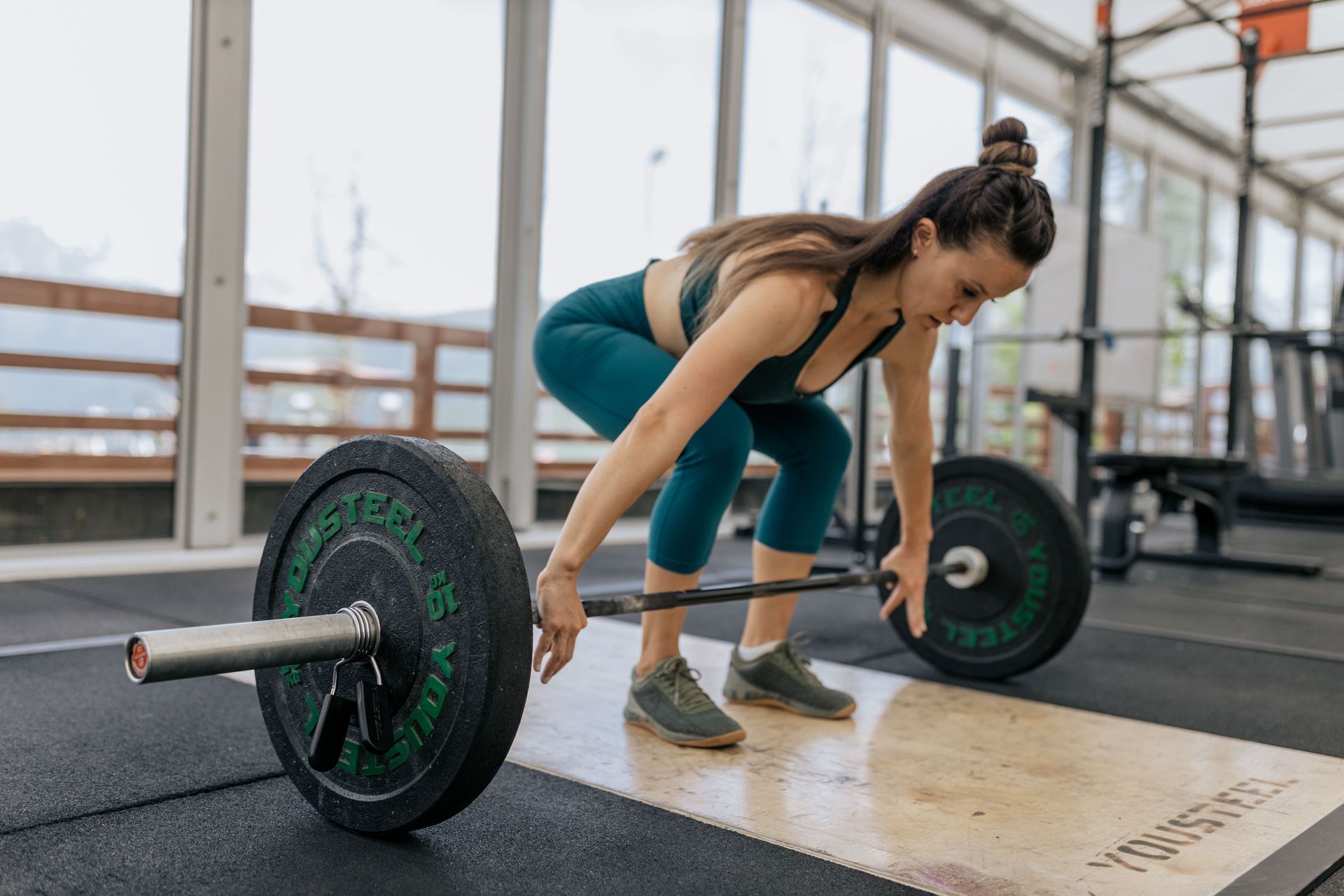
It's Menopause Awareness Month, and I was delighted to hear Sally Gunnell on BBC Radio Sussex backing the British Heart Foundation's 31-day Strong Woman Challenge. The challenge encourages women to build strength with a different exercise every day throughout October.
I've worked with Sally for several years, delivering education sessions to the women in her Life's Hurdle programme, and this message is close to both our hearts. As Sally put it, keeping our muscles and bones strong in our 50s, 60s and 70s means we "can still walk up that hill."
In this post I'll explain why strength matters so much at menopause, share some simple exercises to get you started, and look at how HRT and hormone optimisation can help you get the most from them.
Why strength matters at menopause
Oestrogen does far more than regulate periods. It helps maintain muscle, bone, blood vessels and brain function, so when levels fall, the effects are felt right across the body.
- Muscle. We naturally lose muscle from our 30s onwards, and falling oestrogen speeds this up. Less muscle means less strength, a slower metabolism and more difficulty with everyday tasks like carrying shopping or climbing stairs.
- Bone. Bone loss accelerates in the years around menopause. Women can lose up to 20% of their bone density in the five to seven years afterwards, which is why one in two women over 50 will break a bone because of osteoporosis. Muscles pulling on bones during strength training is one of the best signals to keep bones strong.
- Heart. Before menopause, women have some natural protection against heart disease. After menopause that advantage fades, and heart and circulatory disease becomes a leading cause of death in women. Strength training helps lower blood pressure, improve cholesterol and keep weight in check.
- Metabolism. Muscle is the body's biggest user of blood sugar. Building it improves insulin sensitivity and can help counter the shift towards weight gain around the middle that many women notice at menopause.
- Balance and falls. Strong legs and a strong core keep you steady on your feet. Fewer falls means fewer fractures, which matters more and more as we age.
- Mood and confidence. Exercise helps with low mood, anxiety and sleep. And there's something very powerful about feeling physically strong at a time when your body can feel unfamiliar.
Strength training helps with every one of these.
Four common worries, tackled
"I'll get bulky." You won't. Building large muscles takes years of very specific training, a lot of food and hormones most women simply don't have. What you will get is stronger, more capable and steadier on your feet.
"I don't know where to start." You don't need a gym or fancy kit. Bodyweight exercises, a resistance band and a pair of dumbbells are plenty. The routine below is a good place to begin, and the BHF challenge is a great way in.
"I'm too old." It's never too late. Studies in women in their 70s, 80s and beyond show they can still build strength and improve balance. The benefits start from the first few weeks.
"My joints ache." Joint pain is very common at menopause, and it's understandable to worry about making it worse. In fact, stronger muscles support and protect joints, and many women find their aches improve with regular strength work. Start gently, and see the section on HRT below, as treating the underlying cause can make a real difference.
How much should you do?
The UK Chief Medical Officers recommend muscle-strengthening activity on at least two days a week, alongside 150 minutes of moderate activity such as brisk walking. If you're over 65, adding balance work is also recommended.
A simple way to structure it:
- Two or three sessions a week, with a rest day in between to let muscles recover.
- Eight to 12 repetitions of each exercise, for two to three sets.
- Choose a weight or level that feels challenging by the last couple of reps, while you can still keep good form.
- Build up gradually. When 12 reps feels easy, add a little weight, slow the movement down or try a harder version. This steady progression is what drives results.
Twenty to 30 minutes is enough. Consistency matters far more than intensity.
Exercises to try
This beginner routine works all the major muscle groups and needs nothing more than a chair, a wall, a step and a pair of light dumbbells (or two full water bottles). Warm up first with five minutes of marching on the spot, arm circles and gentle stretches.
- Sit-to-stand squats (legs and bottom). Sit on the edge of a sturdy chair, feet hip-width apart. Lean forward slightly and stand up without using your hands, then slowly lower back down. As you get stronger, hold a dumbbell at your chest or squat without the chair.
- Wall press-ups (chest, shoulders and arms). Stand an arm's length from a wall with your hands flat on it at shoulder height. Bend your elbows to bring your chest towards the wall, then push back. Progress to a kitchen worktop, then to the floor on your knees.
- Bent-over rows (back and posture). Hold a dumbbell in each hand, bend at the hips with a straight back and let your arms hang down. Pull the weights up towards your ribs, squeezing your shoulder blades together, then lower slowly. A strong upper back helps prevent that forward stoop.
- Glute bridges (bottom, hips and lower back). Lie on your back with knees bent and feet flat. Squeeze your bottom and lift your hips until your body forms a straight line from shoulders to knees. Hold for two seconds and lower.
- Step-ups (legs and balance). Step up onto the bottom stair or a sturdy step with one foot, bring the other up to meet it, then step down. Do all reps on one side, then switch. Hold the bannister if you need to.
- Shoulder press (shoulders and arms). Sitting or standing, hold dumbbells at shoulder height with palms facing forward. Press them overhead, then lower slowly.
- Farmer's carry (grip, core and posture). Hold a heavy-ish weight in each hand, such as shopping bags, stand tall and walk for 30 to 60 seconds. Simple, but brilliant for everyday strength.
- Dead bug (core). Lie on your back with arms pointing to the ceiling and knees bent at 90 degrees above your hips. Keeping your lower back pressed into the floor, slowly lower the opposite arm and leg, then return and swap sides.
Bone boosters
Bones respond best to load and impact. Once you're comfortable with the routine above, and if you don't have osteoporosis or a pelvic floor problem, try adding:
- Heel drops. Rise up onto your toes, then drop down onto your heels with a firm thud. Aim for 20 to 50 a day.
- Small jumps or skipping, or brisk walking with short bursts of jogging.
Balance
Practise standing on one leg while you brush your teeth or wait for the kettle, holding the worktop if needed. Build up to 30 seconds on each side, then try it with your eyes closed. Tai chi and yoga are great too.
Staying safe
Strength training is safe for the vast majority of women, but a few points are worth knowing.
- Osteoporosis. You can and should still strength train, as it's one of the best things you can do for your bones. If you've had spinal fractures or have severe osteoporosis, ask your GP for a referral to a physiotherapist first. Avoid high-impact moves and repeated deep forward bending (such as sit-ups or toe touches) until you've had advice.
- Pelvic floor. Leaking when you lift, jump or cough is common, but it isn't something you have to live with. Breathe out as you lift rather than holding your breath, and do your pelvic floor exercises daily. If symptoms persist, a women's health physiotherapist can help, and treatment is available (see below).
- Joints and existing injuries. Start with lighter weights, move slowly and through a comfortable range. Some muscle soreness a day or two later is normal; sharp pain is not.
- Heart conditions and other health problems. If you have a heart condition, high blood pressure that isn't well controlled, or you haven't exercised for a long time, check with your GP before starting.
Stop and seek medical advice if you feel chest pain, severe breathlessness, dizziness or palpitations while exercising.
How hormone optimisation helps
As a hormone doctor, I see the same pattern again and again: women who know exercise is good for them, but are too exhausted, sore or low to get started. For many women, HRT and exercise work best together. HRT can remove the barriers, and exercise builds on the foundation it provides.
Protecting your bones. Oestrogen is one of the most effective ways to prevent bone loss after menopause, and HRT is recommended by NICE for preventing osteoporosis in women who are at risk. Combined with strength training, it gives your skeleton the best possible protection.
Better sleep, more energy. Night sweats and broken sleep leave many women running on empty. By easing hot flushes and night sweats, HRT often improves sleep, and better sleep means more energy to exercise and better recovery afterwards. Body-identical micronised progesterone, taken at night, can also have a calming effect that helps some women sleep.
Easing aches and pains. Joint and muscle aches are among the most common symptoms of menopause, and they often improve once oestrogen is replaced. That can make the difference between a painful workout and an enjoyable one.
Lifting mood and motivation. Low mood, anxiety and brain fog can sap the motivation to do anything at all. Many women tell me they feel like themselves again on HRT, and that's often when exercise becomes possible.
Supporting muscle. Oestrogen plays a role in how muscle is maintained and repairs itself. The research is still developing, but there's some evidence that HRT may help women preserve muscle and respond better to training. What's clear is that exercise remains essential: HRT is not a substitute for lifting weights.
Testosterone. Women make testosterone too, and levels fall with age. In the UK, testosterone is recommended for women with low sexual desire that hasn't improved with HRT alone. Some women also report better energy, wellbeing, and improvements in body composition although the evidence for these benefits is less certain. It isn't right for everyone, so it should always be prescribed and monitored by a doctor.
Vaginal oestrogen for bladder and pelvic symptoms. Low oestrogen thins the tissues of the vagina and bladder, which can lead to urgency, frequent urine infections and leaking. Low-dose vaginal oestrogen is very safe, can be used alongside other HRT, and together with pelvic floor exercises can make it much easier to exercise with confidence.
Your heart. For most women who start HRT before 60, or within 10 years of their last period, the benefits outweigh the risks. HRT on its own isn't a treatment for heart disease, but it's another reason to think about your long-term health at this stage, alongside exercise, diet and not smoking.
HRT isn't suitable for everyone, and the right type, dose and route vary from woman to woman. That's why a personalised consultation matters.
It's never too late to get stronger
Whether you're 45 or 75, building strength now is an investment in the years ahead: walking up that hill, carrying the grandchildren, travelling and staying independent. Start small, be consistent and celebrate your progress.
Why not join the BHF Strong Woman Challenge this October and try a new exercise every day? And if menopause symptoms are holding you back, you don't have to put up with them.
If you'd like to talk through your symptoms and treatment options, book a consultation with The Women's Hormone Clinic.