Hair Loss in Women: The Menopause Connection
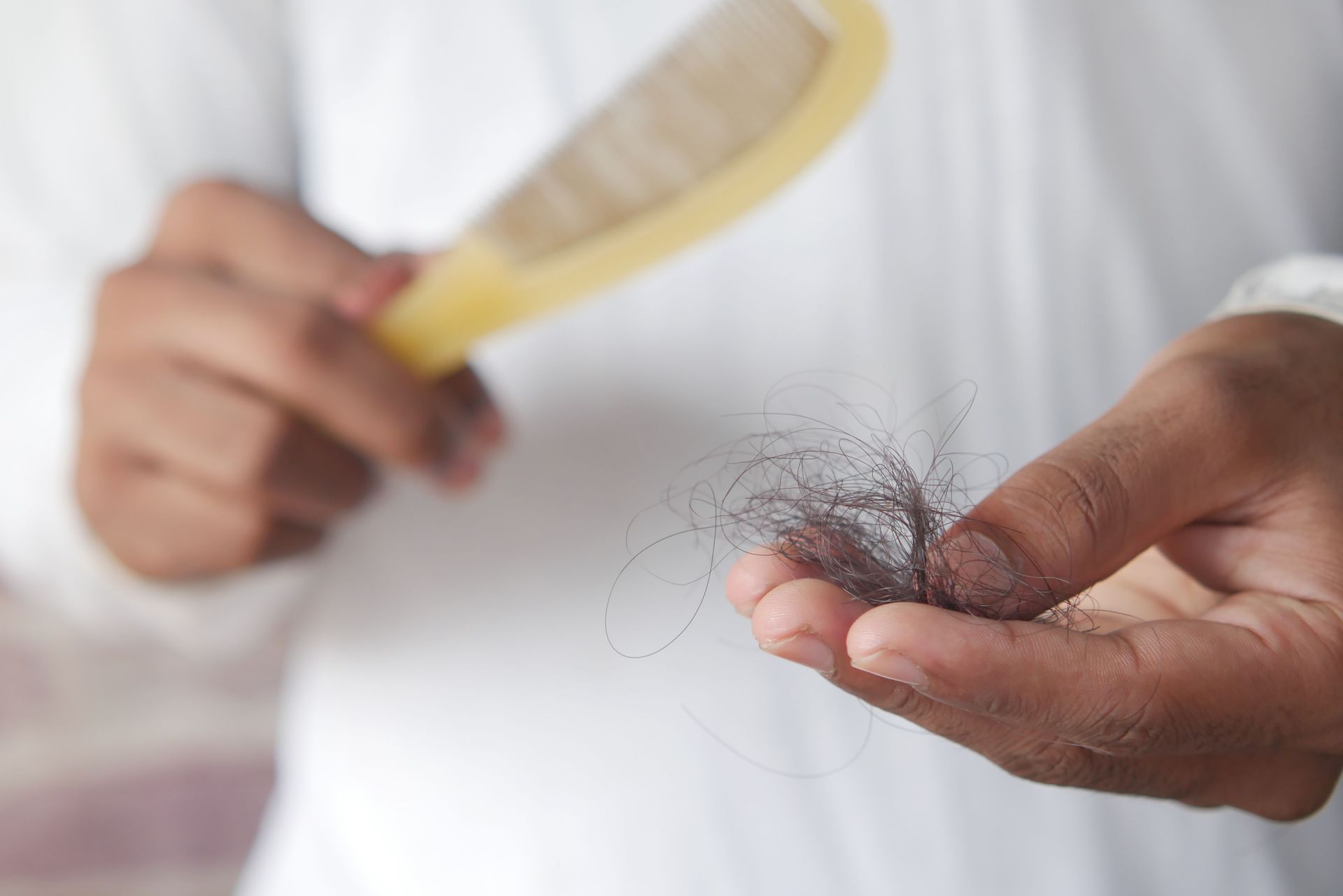
Hair loss is one of the most distressing changes many women experience, and one of the least talked about. For something so visible, it is remarkable how often women are left to navigate it alone, unsure whether what they are seeing is normal or a sign of something that can be treated.
We recently sat down with consultant dermatologist Dr Paul Farrant from Experts in Skin and Hair for a conversation about hair loss in women, which we are sharing as a series across our channels. It was such an informative discussion that we wanted to bring the key themes together here too.
The truth is that hair loss in women is common, particularly around perimenopause and menopause, and in many cases there is a great deal that can be done. The first and most important step is understanding what type of hair loss you are experiencing, because the right treatment depends entirely on getting that right.
Why Hair Changes Around Menopause
Hair growth is influenced by hormones, so it is no surprise that hair often changes as those hormones shift. During perimenopause and menopause, oestrogen and progesterone levels decline. These hormones help keep hair in its growing phase for longer, so as they fall, hair can start to thin, grow more slowly and feel finer than it used to.
At the same time, as oestrogen falls, the relative influence of androgens can increase. This shift can contribute to thinning on the scalp, particularly around the crown and parting, while sometimes also causing unwanted hair growth on the face. It can feel like a cruel irony, less hair where you want it and more where you do not.
The Different Types of Hair Loss
One of the most useful things Dr Farrant highlighted is that hair loss is not one single condition. The two most common patterns seen in women are quite different, and they are treated differently too.
Telogen effluvium is a diffuse shedding of hair, where more hairs than usual enter the resting phase and fall out. It often appears two to three months after a trigger such as illness, a high fever, childbirth, significant stress, rapid weight loss, thyroid problems or iron deficiency. Acute telogen effluvium is usually self limiting and tends to recover once the underlying cause is addressed. Chronic telogen effluvium is more persistent, continuing beyond six months, and often needs a fuller assessment to identify what is driving it.
Female pattern hair loss is different. Rather than a sudden shed, it is a gradual thinning driven by the effect of androgens on the hair follicles. Over time the follicles miniaturise, producing progressively finer hairs, and the parting can appear to widen. This is the pattern most associated with hormonal change and ageing.
It Is Not Always Your Hormones
While hormonal change is a common contributor, it is important not to assume hormones are the whole story. Hair loss can also be caused or worsened by iron deficiency, thyroid dysfunction, certain medications, nutritional factors, stress and underlying medical conditions.
This is exactly why a proper assessment matters, a point Dr Farrant returned to throughout our conversation. Attributing hair loss to menopause alone risks missing another treatable cause. A good assessment looks at the full picture, including blood tests where appropriate, to identify anything contributing to what you are experiencing.
What Can Actually Help
The encouraging news is that hair loss in women is often treatable, particularly when the cause is identified early. Where there is an underlying factor such as iron deficiency or a thyroid problem, addressing it can make a real difference.
For hormonally driven hair loss, options may include optimising your hormonal health, alongside evidence-based treatments used specifically for hair loss, ranging from over the counter approaches to prescription options for those who need them. Because the right approach depends on the type of hair loss and its cause, treatment should always be tailored to you rather than based on a one-size-fits-all solution or something you have seen advertised online.
Setting Realistic Expectations
One theme from our conversation with Dr Farrant is worth holding onto: hair loss treatment takes time and patience. With many types of hair loss, the first goal is to stabilise the shedding and prevent further loss, before any regrowth can be considered. Because hair grows slowly, improvement is measured over months rather than weeks.
Understanding this from the outset makes the process feel far more manageable, and helps you recognise progress rather than expecting overnight change.
When to Seek Help
If you have noticed your hair thinning, shedding more than usual or changing in texture, and it is affecting how you feel, it is worth seeking advice. You do not need to wait until it becomes severe, and you certainly do not need to simply put up with it.
Hair loss can have a real impact on confidence and wellbeing, and that impact deserves to be taken seriously. Understanding what is happening is the first step towards feeling like yourself again.
The Bottom Line
Hair loss around menopause is common, but common does not mean you have to accept it without answers. The type of hair loss matters, the cause matters, and getting the right diagnosis is what makes effective treatment possible.
Our thanks to Dr Paul Farrant for such a generous and informative conversation. If your hair has changed and you would like to understand why, our specialist team and Experts in Skin and Hair can help you get to the root of it and explore the options available to you.