From a Caribbean Island to an African Island: Tracing My Roots to Bioko
An ancestral journey, an unexpected new name, and reflections on identity in midlife.
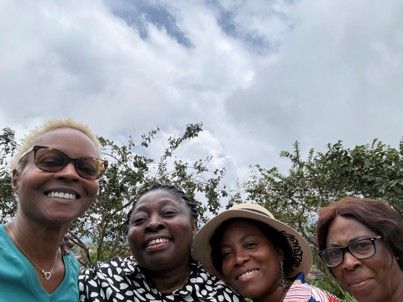
With Piruchi Apo and members of her backing vocal group during the excursion to Ureka.
In 2012, I watched an episode of Finding Your Roots, the American television series presented by Henry Louis Gates Jr. The episode featured Samuel L. Jackson, Condoleezza Rice and Ruth Simmons, whose family histories were explored through genealogical research and DNA testing.
Like many people of African Caribbean descent, I knew relatively little about my ancestors before their arrival in the Caribbean. The transatlantic slave trade had left gaps in my family history that conventional genealogical research could not easily fill.
Inspired by the programme, I took a DNA test with African Ancestry.
Unlike the more familiar autosomal tests offered by companies such as 23andMe, which examine DNA inherited from both parents, my test analysed mitochondrial DNA. This is passed from mothers to their children, but only daughters pass it on to the next generation. It therefore allows us to trace one continuous maternal line through many generations, although it tells us nothing about the vast majority of our ancestors.
My result identified a maternal genetic connection to the Bubi people of Bioko Island, Equatorial Guinea, off the coast of Central Africa.
I was exhilarated. Suddenly, I had something that felt like an origin story. Not simply Africa, but a people, an island, a place I could find on a map.
I imagined visiting one day, but life intervened, and the years passed. Nearly fifteen years later, in October 2026, I finally made the journey.
An unexpected sense of familiarity
I was born in Guyana, raised in Barbados and have spent much of my adult life in Britain. My identity has always been shaped by more than one country and culture.
Bioko was somewhere entirely new. I spoke neither Spanish, one of the country's official languages, nor Bubi, the indigenous language of the island, and knew relatively little about its history and traditions.
Yet there were moments of unexpected familiarity. The tropical landscape, fruits and foods recalled the Caribbean. Some of the faces reminded me of relatives back home.
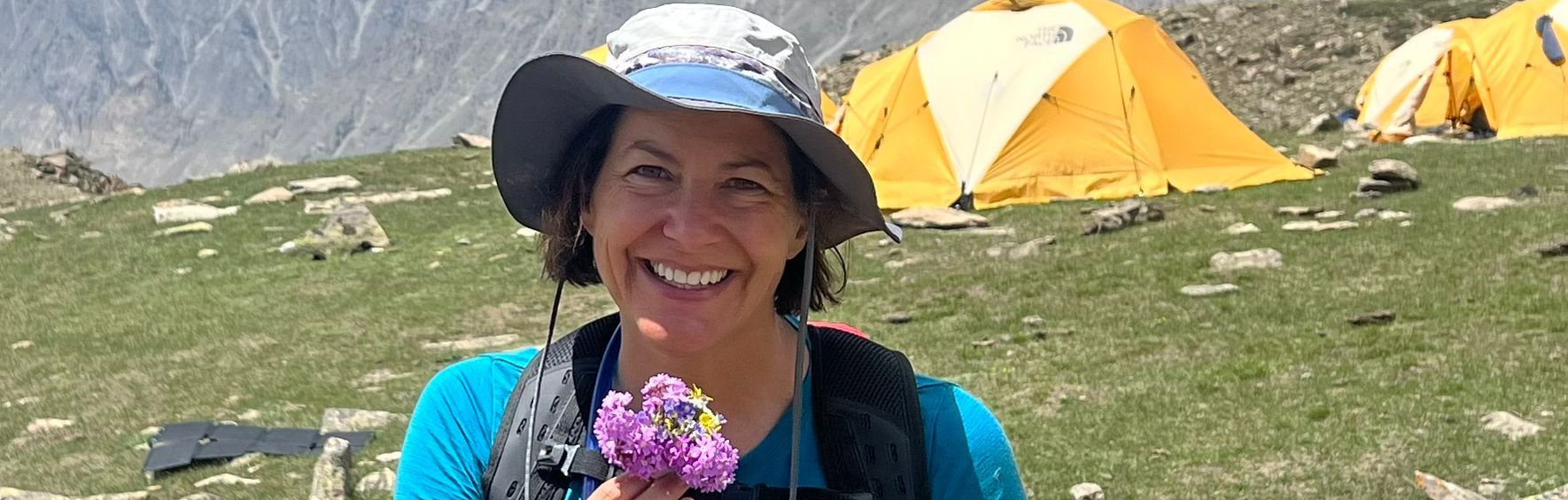
Over the following days, I travelled around the island with my guide, Bitehelebo, visiting villages, markets, cocoa farms and waterfalls, meeting people who generously shared their stories and traditions.
Menarche, menopause and freedom
One of my most memorable experiences was an excursion to Ureka with Piruchi Apo, an internationally acclaimed Bubi singer, formerly of the duo Las Hijas del Sol, and two members of her backing vocal group.
As we travelled through the island's mountainous landscape, we talked about traditional Bubi beliefs and customs, including those surrounding menarche and menopause.
The women described rituals marking a girl's first menstruation (menarche), including periods of seclusion, restrictions on certain activities, and celebrations marking the end of the ritual period.
I was intrigued by the way these biological experiences were given cultural and social significance.
Naturally, given my interest in women's hormonal health, I asked about menopause. Were there equivalent rituals marking the end of reproductive life?
Their answer surprised me. There appeared to be no comparable ceremonies. Instead, they explained that after menopause, women could do anything that men could do.
I found the contrast fascinating. Menarche was marked by rituals and restrictions, while menopause appeared to confer a new freedom.
These were, of course, the accounts of three women rather than a comprehensive description of Bubi traditions. But the conversation stayed with me.
We tend to discuss menopause in terms of symptoms, hormonal changes and treatment. Yet it is also a transition that takes place within a particular cultural and social context.
For some women, menopause coincides with a reassessment of their roles, relationships and sense of identity. Perhaps it can also be an opportunity to reconsider the expectations and restrictions that have shaped their lives.
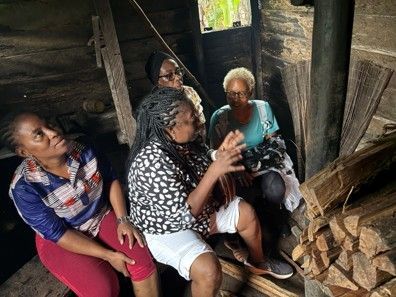
Sheltering from the rain during the Ureka excursion.
Becoming Wiyana
Earlier in the trip, I had participated in a Bubi naming ceremony, although I had mixed feelings about it.
I had come to Bioko to explore my ancestry, but I was uncomfortable with the idea that a genetic connection necessarily made me Bubi. I hadn't grown up with the language, customs or experiences of the community.
Ancestry is something we inherit; cultural identity is also something we live.
During the ceremony, tola, a traditional plant preparation, was rubbed onto my body, and I was given the name Wiyana, meaning helper.
To my surprise, I liked it. The name had been chosen by Gerry, a Bubi artist, and it felt unexpectedly appropriate. Helping others has been a significant part of my life, both personally and through my work as a psychiatrist.
I didn't suddenly feel that I had become Bubi, but I could recognise something of myself in the name.
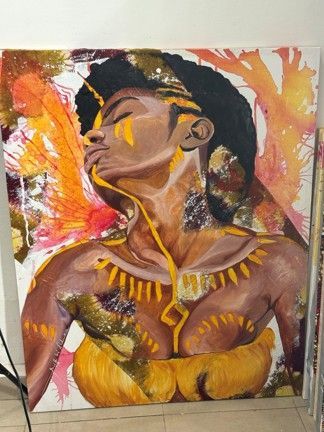
Artwork photographed during a visit to Gerry’s studio.
Identity in midlife
I've been thinking increasingly about identity in recent years, and how it can change during middle age.
At this stage of life, we may find ourselves questioning roles and expectations that once seemed firmly established. Menopause can be part of that process, although the reassessment of identity in midlife is certainly not confined to hormonal change.
Perhaps we become more interested in where we came from, more conscious of the passage of time, or more willing to question the ways in which we've defined ourselves.
My journey to Bioko didn't resolve the question of belonging. A genetic connection cannot replace the shared language, culture and lived experiences that shape a community.
But it gave me something that a DNA certificate alone never could: encounters with people, places and traditions that brought one thread of my ancestry to life.
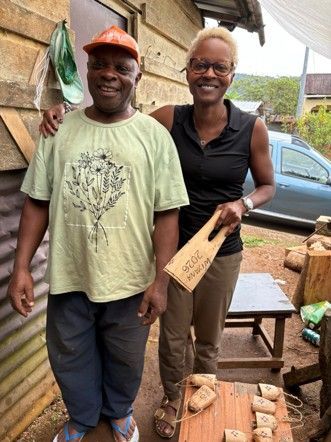
With Papa Ricardo, who makes traditional elebos, in Moka.
I returned with memories of torrential rain in Ureka, plantains roasting over a fire as Piruchi and her companions sang, and conversations that challenged me to think differently about identity and the stages of women's lives.
And I returned with another name.
Wiyana.
I'm still deciding exactly what it means to me. Perhaps I don't need to decide.